
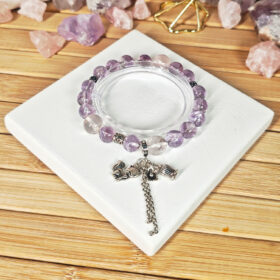
 Amethyst Bracelets
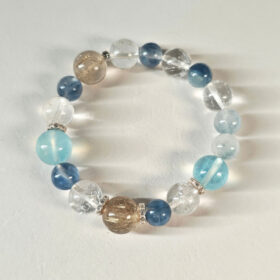 Aquamarine Bracelets
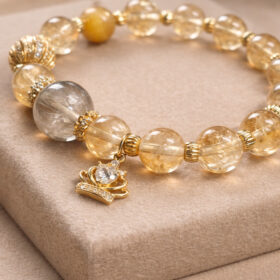 Citrine Bracelets
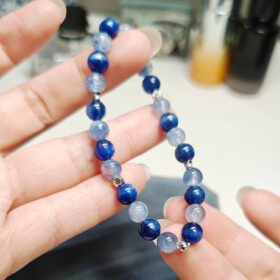 Kyanite Bracelets
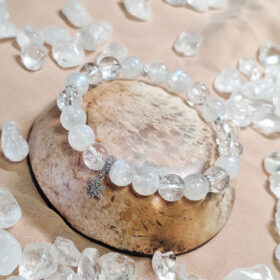 Moonstone Bracelets
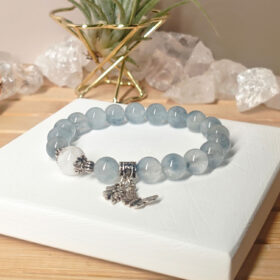 Rutilated Quartz Bracelets
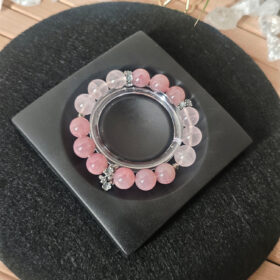 Rose Quartz Bracelets
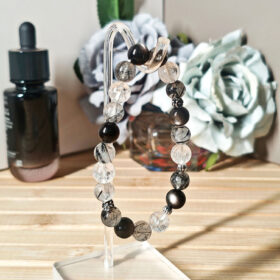 Silver Obsidian Bracelets
Real or Glass? Know in Five Minutes
Seven at-home tests, no lab needed
Bubbles, colour zoning, drill holes and price floors — the four clues that never lie.
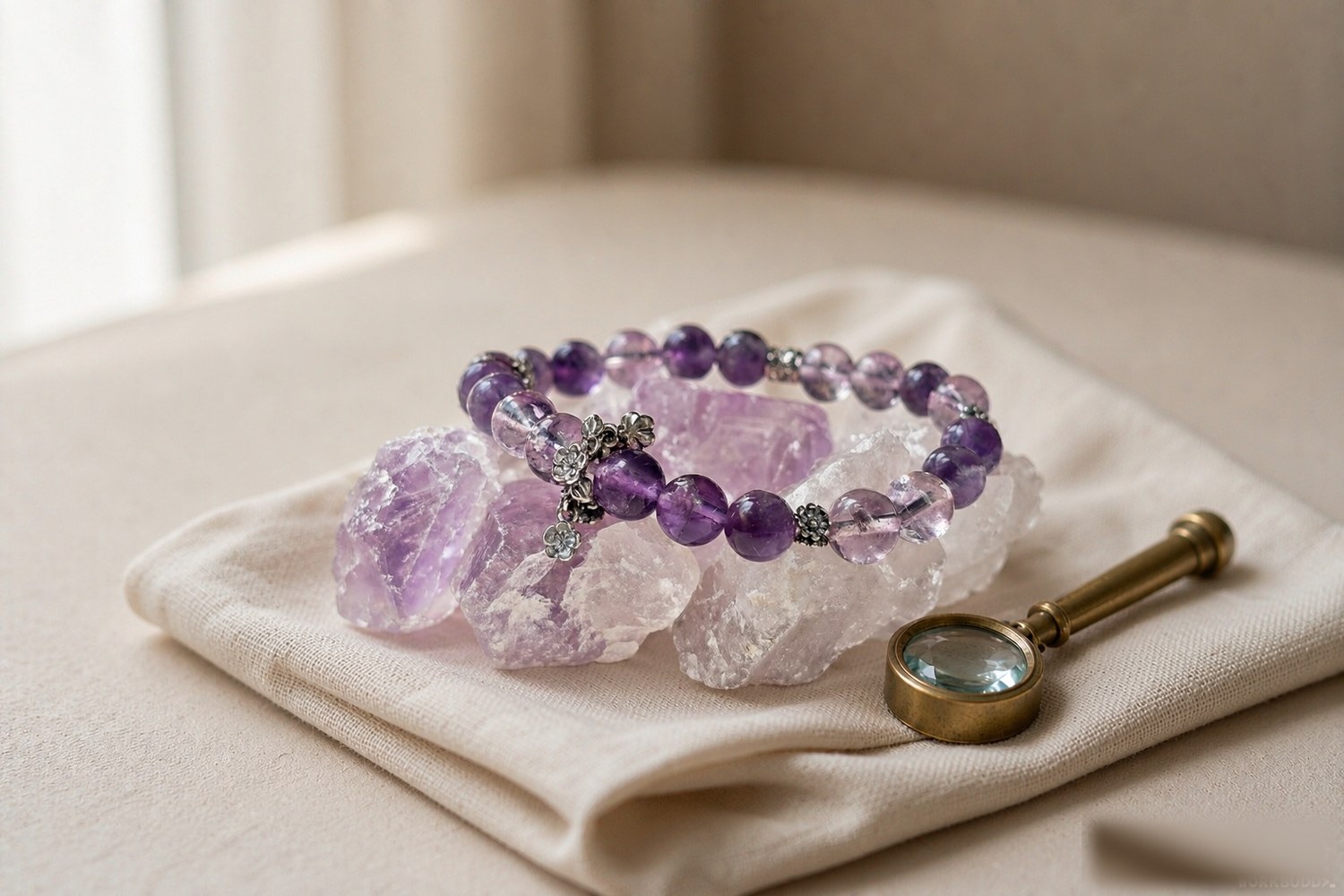
How to Spot a Real Crystal Bracelet
A practical buyer’s checklist — from the cold-touch test to the questions serious sellers expect.
Shop Crystal BraceletsA real crystal bracelet is easy to love and surprisingly easy to imitate. Because polished beads hide most of what gemologists look for, glass, dyed resin, and reconstituted stone can pass for genuine quartz at first glance — especially in photos. This guide walks through a practical checklist: seven at-home tests, the visual clues that separate natural stone from imitation, the price signals that expose suspicious listings, and the exact questions worth asking a seller before you pay. None of it requires lab equipment; a loupe, a glass of water, and a patient eye will get you most of the way. By the end, you will be able to look at any strand of beads — including the pieces in our crystal bracelets collection — and make a confident, informed judgement.
What “Real” Actually Means for a Crystal Bracelet
Before testing anything, it helps to define the term. In the jewellery trade, a real crystal bracelet means beads cut and polished from naturally formed mineral crystals — most often quartz varieties such as amethyst, citrine, rutilated quartz, and aquamarine, which is a member of the beryl family. These minerals formed slowly inside the earth over millions of years, which is exactly why they carry internal veils, colour zoning, and mineral inclusions rather than the uniform perfection of factory glass.
Two clarifications keep buyers out of trouble. First, “genuine” does not mean “flawless”. Natural stones almost always contain visible internal features; a strand of perfectly identical, perfectly clean beads at a low price is a warning sign, not a bargain. Second, the word “crystal” is used loosely online. Lead crystal glass, cheap glass beads, and man-made crystal are all marketed with the same vocabulary, which is how so many imitations slip through. When in doubt about what a specific stone actually is, a mineral database such as Mindat — the world’s largest reference for quartz and other minerals — is a good neutral starting point, and our own guide to what crystals are best for you explains how the common bracelet stones differ.
Seven At-Home Tests That Actually Work
You do not need a gemology degree to screen a bracelet. These six checks take minutes and will catch the vast majority of fakes. Run them in order — the first two alone eliminate most glass imitations.
The Cold-Touch Test
Natural stone conducts heat away from your skin quickly, so genuine beads feel distinctly cool on first contact, then slowly warm up. Glass and resin feel neutral or slightly warm immediately. Press the strand flat against the inside of your wrist or your cheek for a few seconds; a real crystal bracelet should feel like touching a bathroom tile on a cool morning. This test is subjective on its own, but combined with the visual checks below it becomes reliable. A refinement: move the bracelet between warm and cool rooms. Stone lags behind the air temperature; plastic tracks it almost instantly.
The Visual Inspection: Inclusions, Veils and Bubbles
This is the single most useful check, and it answers the question buyers ask most — do real crystal bracelets have bubbles? Generally, no. Round gas bubbles are the signature of glass, which is melted and cooled quickly, trapping air. Natural quartz instead shows:
- Angel-hair inclusions and veils — thin, irregular internal lines that catch the light.
- Colour zoning — bands or patches of deeper and lighter colour, often following the crystal’s growth direction. Our close-up shots of the blue rutilated quartz success bracelet show this clearly: every bead differs from its neighbours.
- Needle-like mineral threads — the golden or blue “rutile” hairs that give rutilated quartz its name. Browse the rutilated quartz bracelets category and you will see that no two beads share the same pattern.
- Crazing or internal “cracks” — natural cleavage planes, common in stones like aquamarine.
Hold the beads against a bright window or a phone torch and look through them with a $10 jeweller’s loupe, or even a phone camera zoomed in. Perfectly round, perfectly evenly spaced bubbles = glass. The Gemological Institute of America’s gem education library has excellent reference photos of what natural inclusions look like under magnification.
The Scratch and Hardness Check
Quartz scores 7 on the Mohs hardness scale — it scratches glass and ordinary steel, and it cannot be scratched by a steel knife or a copper coin. Take an inconspicuous bead and try to mark it with a steel nail or the edge of a coin: genuine quartz will not dent or powder, while softer imitations (calcite, resin, reconstituted stone) will show a white groove. Use a light touch on a hidden bead near the knot, and never scratch the display face of the strand you intend to keep. Softer genuine stones such as fluorite (Mohs 4) will fail this test while still being real — so use the scratch check as a filter for fakes, not a certificate of authenticity.
Weight and Density
Quartz is noticeably denser than glass or plastic of the same volume. Pick the bracelet up: a real crystal bracelet feels heavier than it looks, with a cool, substantial drape. If you own any certified piece, compare the two in your hands. For a more objective version, measure the approximate bead diameter, count the beads, and weigh the strand — quartz beads of 8 mm weigh roughly a gram each, so a 22-bead strand should land near 22–26 grams including the cord and spacers. Resin fakes of the same size weigh half as much; glass lands in between, which is why this test confirms rather than decides.
The Bead-Hole Inspection
The drill hole is where imitations give themselves away. On a natural bead, the hole walls are slightly chipped and uneven — stone chips as it is drilled — and under a loupe you can often see the drill marks spiralling inside. On a glass imitation, the hole walls are smooth and glassy, sometimes with a mould seam running across the bead at one point. Turn every bead on the strand and check the holes with the loupe. A mould seam plus perfectly smooth holes on a strand “sold as amethyst” is close to conclusive evidence of glass.
The Water and Thread Checks
Two quick field tests finish the screen. First, a genuine stone disperses heat rapidly, so one bead out of a cool bracelet fogging differently from the others in a steamy bathroom hints at mixed materials. Second, look at how the strand is strung. Serious sellers string real stone on strong elastic cord with a firm, often doubled knot — visible on close inspection — and increasingly on knotted threads between beads. Sloppy stringing is not proof of fakery, but a “premium” price on a badly strung strand is a mismatch worth questioning.
Dyed, Reconstituted and Lab-Grown: Not Quite Fakes, Not Quite Natural
The hardest cases are not glass at all. Three categories sit in the grey zone, and an honest seller tells you which one you are buying.
Dyed beads start as real, cheap, pale stone — often low-grade quartz or agate — that is soaked in dye to imitate amethyst, citrine, or bright turquoise. Clues: colour concentrated in cracks and around drill holes, saturated, uniform tones that no natural specimen shows, and — under the loupe — dye pooling along internal fractures. A drop of acetone on a cotton bud, rubbed on a hidden bead, may lift surface colour from dyed pieces.
Reconstituted beads are genuine stone crushed to powder, mixed with a binder, and re-formed. Under magnification they look like a granola bar: no crystal structure at all, no inclusions, sometimes visible flecks pressed into a flat plane. They weigh like stone but fail every structural test.
Lab-grown crystals are the most interesting case. Hydrothermally grown quartz is chemically identical to mined quartz, and for amethyst and citrine it is common in the market. It passes the cold, hardness, and weight tests. What it usually lacks is strong colour zoning and distinctive inclusions — so a “too clean, too even” strand at a low price may be lab material. Lab-grown is not a scam if priced and disclosed as such; it only becomes one when it is sold at natural-stone prices without disclosure.
Our own buying guides make these distinctions part of the story — for example, the aquamarine and kyanite bracelet product page and our explainer on whether aquamarine is a gemstone or a crystal both show what honest material descriptions look like.
Price Signals: What a Genuine Bracelet Should Cost
Price is the fastest pre-purchase filter. Natural gemstone beads cost money at every step — mining, cutting, drilling, sorting, stringing — and that cost cannot be invisible. A strand of 8 mm amethyst or citrine beads that looks flawless for under about $15 is almost certainly glass, dyed stone, or lab material sold as natural. Rarer varieties carry higher floors: good rutilated quartz with dense golden needles, like the stone in the golden rutilated quartz and citrine wealth bracelet, commands a multiple of plain quartz because the inclusion patterns are one-of-a-kind.
Three pricing patterns deserve suspicion:
- Uniform “sale” prices across varieties. Amethyst, citrine, and rutilated quartz never cost the same per bead in the real trade.
- Flawless appearance at fashion-jewellery prices. Clean, zoned, included stone is rare by definition.
- Photographed-perfect, stock-identical listings. If a shop’s every strand looks the same, they are moulded.
None of this means expensive is automatically genuine — the tests above still apply — but genuinely underpriced “natural” stone is the single most reliable red flag in the market.
Five Questions to Ask Before You Buy
Serious sellers answer specific questions gladly. Ask these five, and the answers will usually sort the shop for you:
- Is this natural, undyed, and unheated — or dyed, heated, or lab-grown? A one-line honest answer is a good sign; vagueness is not.
- Where were the beads cut? Cutting centres are concentrated in a handful of regions; “hand-collected by us” for every variety is a story that rarely survives detail.
- What are the bead diameters and strand length? Real listings know their measurements; see our crystal bracelet size guide for why 8 mm versus 10 mm matters as much as the stone.
- Can you show close-up photos of the actual strand, including drill holes? Stock photos that match fifty other shops are a clear no.
- What is the return policy on authenticity disputes? Confident sellers put it in writing.
What a Real Crystal Bracelet Means to Its Wearer
Buyers rarely choose stone purely on geology. In crystal tradition, each mineral carries its own symbolism: amethyst for a calm, clear mind; citrine and golden rutilated quartz for abundance and confident action; aquamarine for open communication; kyanite for alignment. Many wearers describe choosing a real crystal bracelet the way they would choose a piece of art — the inclusions, zoning, and one-of-a-kind patterns are not defects but the entire appeal, and they make the strand personal in a way no moulded bead can be. Our article on the meaning and symbolism of amethyst explores one example in depth.
Please note: crystal meanings are cultural and traditional beliefs, not medical advice. Wear them for their beauty and personal significance.
Caring for Genuine Beads
Authentic stone rewards a little care. Wipe beads with a soft dry cloth after wear; keep the strand away from perfume, chlorine, and household chemicals, which dull polish and — in dyed stones — bleed colour. Store the bracelet flat or in a padded case; our jewellery case for bracelets is designed exactly for this and protects the beads from harder pieces in your box. Quartz is hard but brittle: a knock against tile can chip a bead edge even though the bead scratched your coin. When your strand needs a deeper refresh, our step-by-step guide on how to cleanse and recharge a crystal bracelet covers safe methods that will not damage cord or polish. If you are choosing a stone for the first time, the walkthrough in what crystals are best for you pairs nicely with a piece like the minimalist clarity crystal bracelet.
Frequently Asked Questions
Do real crystal bracelets have bubbles inside the beads?
Almost never. Round gas bubbles indicate glass, which traps air as it cools. Natural quartz shows veils, colour zoning, and mineral inclusions instead — irregular internal features, not spheres.
How can I tell if an amethyst bracelet is real?
Look for colour zoning — deeper purple in patches or bands rather than one even tone — plus natural inclusions. Dyed imitations show concentrated colour around cracks and drill holes, and fail the cold-touch and hardness checks.
Is lab-grown quartz a fake?
Chemically, no — it is the same mineral grown in a lab instead of the ground. It is only misleading when sold at natural-stone prices without disclosure. Ask the seller directly; honest shops state the origin.
Why are some “crystal” bracelets so cheap?
Glass and resin beads cost cents to mould, and dyed low-grade stone costs little more. Genuine gemstone beads carry mining, cutting, and sorting costs that set a real price floor — so a flawless-looking $10 “amethyst” strand is nearly always an imitation.
Will a real crystal bracelet scratch glass?
Quartz varieties will — they score about 7 on the Mohs scale, harder than window glass and steel. Softer genuine stones such as fluorite will not, so use the scratch test to rule fakes out, not to confirm authenticity.
Can a jeweller verify my bracelet for me?
Yes. Local jewellers and gem labs can run refractive index and specific gravity tests that conclusively identify quartz, beryl, and glass. For a valuable strand, a small verification fee is worth the certainty.
What is the quickest first check on a bracelet I already own?
The bubble check: shine a phone torch through the beads and look for round evenly spaced bubbles. Then run the cold-touch and bead-hole tests. Those three take under five minutes and catch most imitations.
The Takeaway
Authenticity is a habit of checking, not a talent. Feel for that cool, dense weight, look through the beads for veils instead of bubbles, inspect the drill holes, sanity-check the price, and ask sellers the five questions above. If you want a shortcut, start with a shop that photographs its actual strands and describes every stone honestly — browse the full crystal bracelets collection and apply the checklist yourself; a real crystal bracelet should pass every test in this guide.